

























































The U.S. Department of Justice has sued a Henderson dental device manufacturer, asking a federal judge to block the company from making or selling its bone-grafting and dental cement products until it fixes years of alleged federal safety violations. The civil complaint targets Steiner Biotechnology LLC, its CEO Gregory S. Steiner, DDS, and co-owner Roslynn L. Steiner, accusing them of distributing adulterated and misbranded medical devices to dental clinics nationwide.
The lawsuit was filed August 6 in the U.S. District Court for the District of Nevada, case number 2:26-cv-02410, according to the U.S. Department of Justice. The company runs its headquarters and manufacturing site out of 1051 Olsen Street, Suite 3611, in Henderson, placing the federal case squarely in Clark County's cluster of life science businesses, per the same filing.
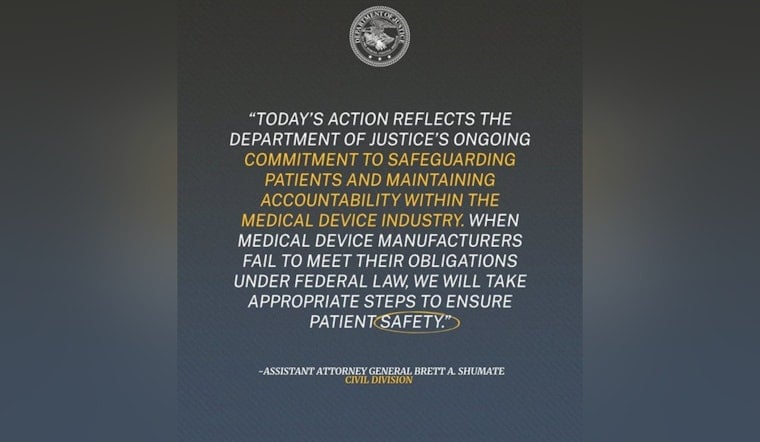
The US Attorney Nevada office amplified the news in a social post this week, sharing the Justice Department's message that it had filed a complaint “to stop a Nevada firm from manufacturing and selling adulterated and misbranded dental products.” In that same referenced statement, Assistant Attorney General Brian Shumate said the Department of Justice “is committed to safeguarding patients and maintaining accountability within the medical device industry,” adding that when manufacturers fail to meet their obligations under federal law, “the department of justice will take appropriate steps to ensure patient safety.”
What the Complaint Alleges
According to the DOJ complaint, Steiner Biotechnology distributed Class III medical devices — the category subject to the strictest federal oversight — without the required FDA Premarket Approvals, cleared 510(k) notifications, or valid Investigational Device Exemptions, as detailed by FSX Business. The products named in FDA enforcement records include synthetic bone grafting materials and dental cements sold under brand names such as Socket Graft, Socket Graft Plus, Socket Graft Injectable, OsseoConduct, Ridge Graft Kit, Immediate Graft, Sinus Graft, and Oral Bond.
The government's case draws on a long paper trail. FDA investigators inspected the Henderson facility at least four times between 2018 and 2025, repeatedly documenting Current Good Manufacturing Practice and Quality System violations, including inadequate device design controls, unvalidated manufacturing processes, and deficient environmental controls, the Justice Department says. Federal rules require device manufacturers to maintain strict quality system procedures under 21 C.F.R. Part 820.
Those inspection findings weren't the agency's first warnings. The FDA issued formal warning letters to Steiner Biotechnology in 2017, 2020, and May 2023 over unapproved product marketing, quality system failures, and protocol deviations during rabbit clinical studies, according to the Regulatory Affairs Professionals Society. That group's data also shows just how rare this level of escalation is: FDA warning letters to medical device manufacturers plunged by nearly 90 percent over a five-year stretch leading into 2019, when the agency's device center issued only nine nationwide.
Company Pushes Back on 'Paperwork' Framing
Steiner Biotechnology isn't conceding the point. In a statement to Becker's Dental Review, CEO Dr. Greg Steiner said the company has operated for 20 years with zero reported adverse events, zero product recalls, and zero defects found by the FDA. He characterized the federal allegations as stemming from paperwork issues rather than unsafe products.
Dr. Michelle Tarver, Director of the FDA's Center for Devices and Radiological Health, offered the government's counterpoint, stating publicly that the civil enforcement action seeks to hold device manufacturers accountable when they fail to meet federal safety standards. The center she leads oversees medical device compliance nationwide.
What a Permanent Injunction Could Mean
The federal complaint requests a permanent injunction under 21 U.S.C. § 332(a) that would prohibit Steiner Biotechnology from manufacturing or distributing any medical devices until it implements mandatory manufacturing and sanitation improvements and achieves full FDA compliance. If granted, the order would effectively freeze the company's operations until it satisfies federal regulators — a remedy the Justice Department has framed as necessary given the multi-year history of unresolved inspection findings.
It remains to be seen how the case will unfold in the District of Nevada. No preliminary injunction hearing date or consent decree has been reported, leaving open whether Steiner Biotechnology will contest the allegations in court or negotiate a resolution with federal regulators.





